
Well, they’re traditionally the strongest club in Wales, I’m afraid! Hate to say it, and I’d love to frame it otherwise (as you’ll see below, there are certain measures where we better them!), but there’s no denying the truth: the capital city and biggest city in Wales can sustain a significant football club.
That’s obviously putting aside the obvious point that, until globalisation kicked in, North Wales was a football stronghold while rugby was the sport of the south. While that holds true to a certain extent – there’s little interest in rugby up here apart from the event-tourism of Wales internationals, while South Wales is one of the few areas of the UK which is committed to rugby union at club level – our historic hegemony of real football is over.
While northern clubs like us and Druids might predate our southern rivals, the truth is that by the time the Football League expanded after the First World War, the growth of football in the industrial cities of the UK meant Cardiff and Swansea had overtaken us in terms of being attractive to the people who ran the game. That’s illustrated by a simple fact: while we were inaugural members of the Third Division North when it was created in 1921, Cardiff and Swansea both joined a year earlier when a single, non-regional Third Division was added, and furthermore Cardiff parachuted straight into the second tier.
City are also the only team to take the FA Cup outside England after a momentous victory in the final against Arsenal. They were received later that year for a Welsh Cup tie in Wrexham with much fanfare as national pride trumped local rivalry: fat chance of that happening when we go to Cardiff as Champions League winners in 2029!
Cardiff, unsurpisingly, have a much more storied history in the EFL than we do, and it’s instructive to look at the comparative records of the three Welsh sides currently in the Championship, if only to remind ourselves of what a remarkable achievement it is for us to be at such a high level, and indeed to have finished above Cardiff and Swansea last season.1
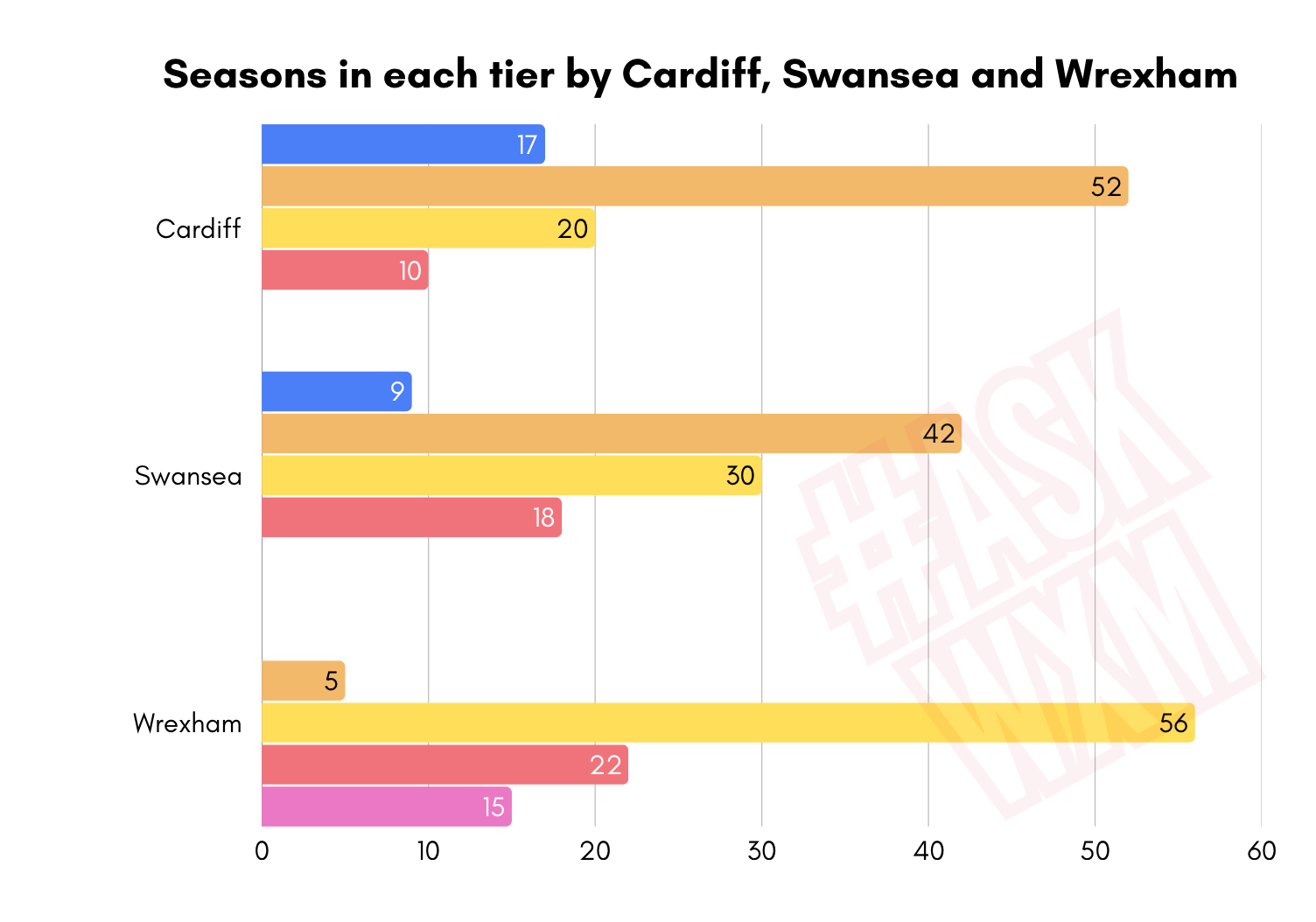
Cardiff are establised as a yo-yo team between the top and second tiers, with an emphasis on the latter, as is illustrated by the amount of seasons they’ve spent at each level. Seventeen years in the top division is comfortably more than any other Welsh club has managed; we’re only embarking on our sixth in the second tier, whereas they’ve spent over half a century at that level.
As you can see below, Swansea have a similar profile, although traditionally they’re more of a yo-yo team between the second and third tiers, although recent seasons have skewed that statistic upwards. We’re solidly third tier, with that grim stint in the National League thrown in: the reason we have spent so many season in the third level is because we never succeeded in gaining promotion from the THird Division North, which had just one promotion slot and no play-offs.
If we consider who the traditional top dogs are in Wales, again by measuring Cardiff, Swansea and Wrexham against each other, we see a story of domination by Cardiff once more.
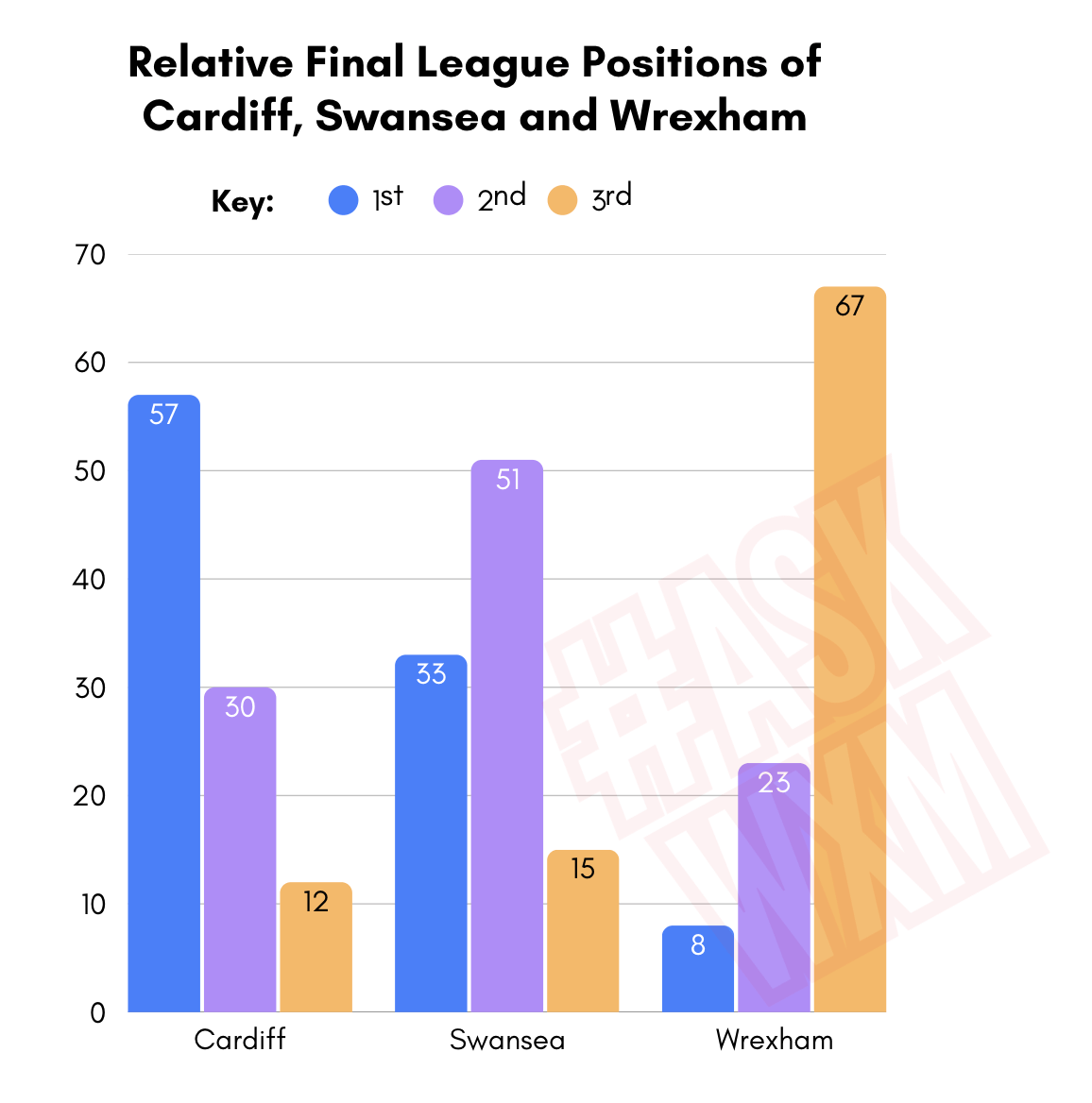
This is the hundredth season of Welsh teams competing in the EFL (obviously Swansea and Cardiff have managed one more than us), and in 57 of those campaigns Cardiff have enjoyed the highest league position. On the other hand, we occupied the lowest on 67 occasions and last season was just the sixth time we’d been Welsh top dogs! It was something of a reversal of fortune: we were third in this particular mini-league in the previous 20 seasons, and last came top of the trio in 2001!
Okay, I think I’ve firmly established our underdog credentials: let’s find those delicious crumbs of comfort! Considering all the above, our record in Welsh competitions is remarkable: we have won the Welsh Cup more times than any other club, despite not being allowed to compete in the competition since 1995 (apart from one weird aberration where we fielded a youth – complete with Danny Ward – for one game!). In essence, that 1995 Welsh Cup Final, in Cardiff, was the decider, and famously we beat Cardiff City, meaning we appear. to be one victory ahead of them for perpetuity.
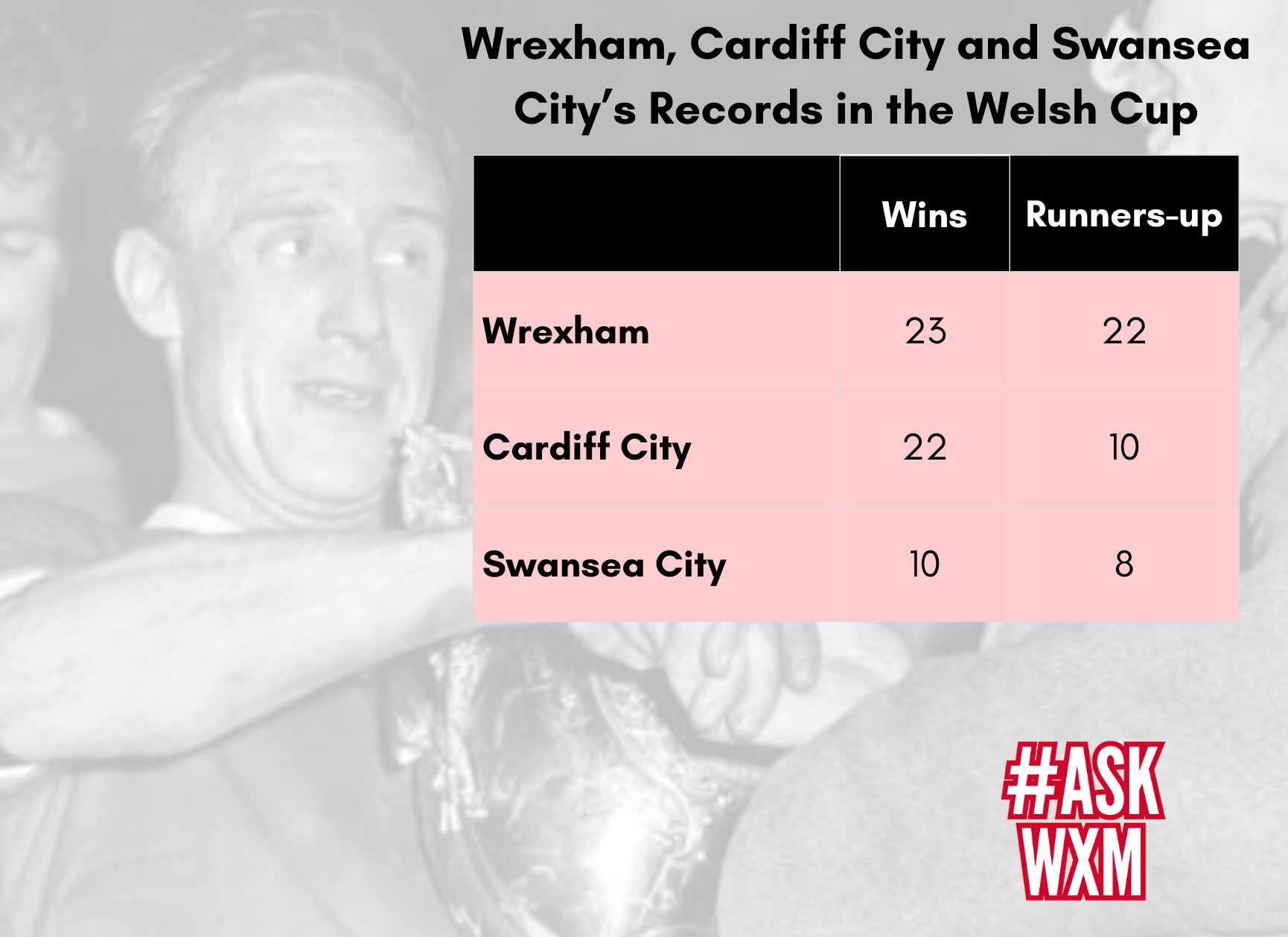
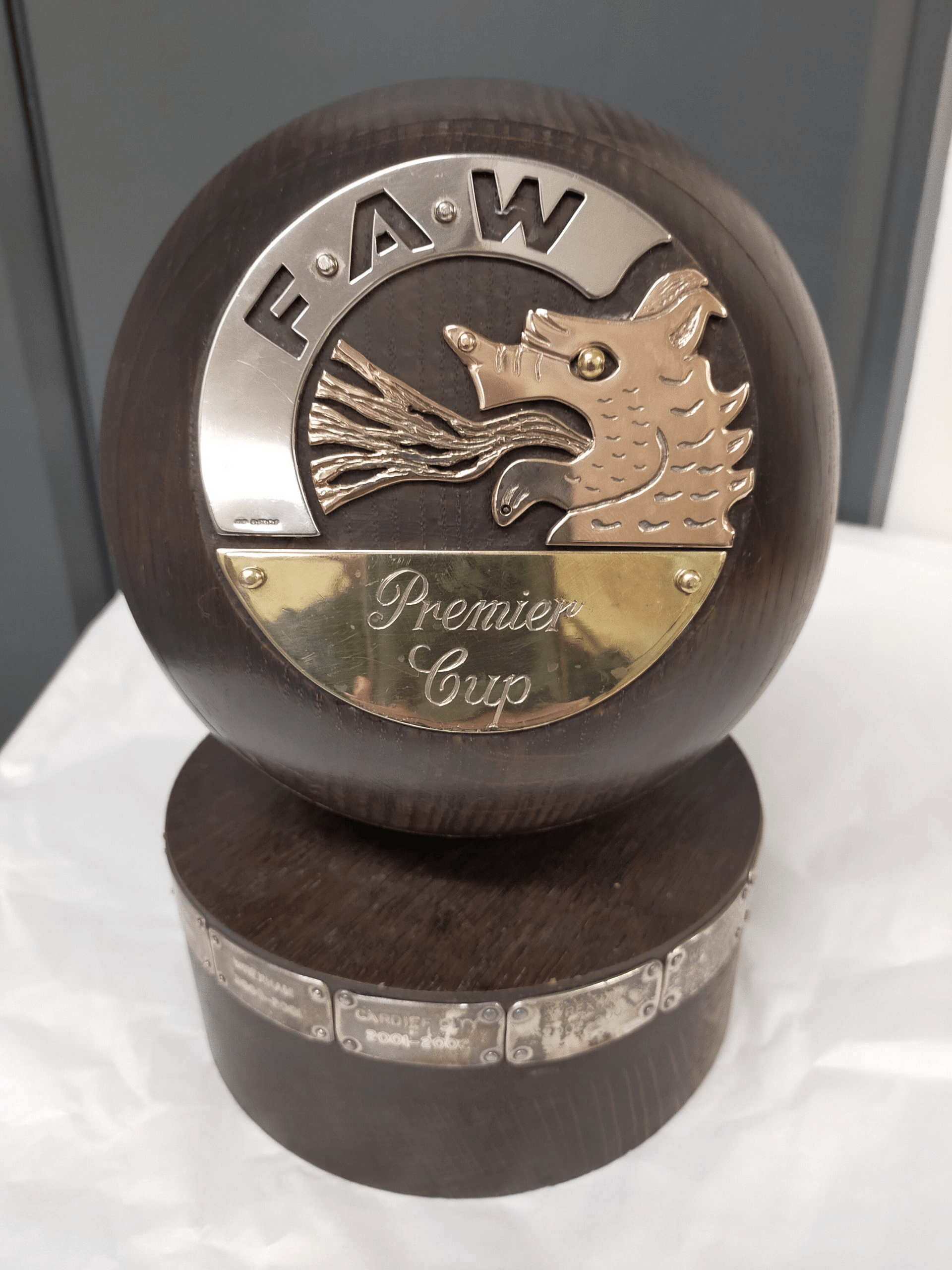
That really is a serious boast, and there’s a little garnish to add as well. When the FAW realised they’d made a dreadful mistake from which there was no retreat, they inaugurated a peculiar competition, the Welsh Premier Cup, which pitted the best League of Wales teams against the exiled English-based sides. We dominated that competition too, although admittedly there has to be an asterisk next to that particular boast: while we used it to develop young talent under Brian Flynn, who judiciously gave the likes of Neil Roberts, Neil Wainwright and Mark Cartwright valuable experience while rotating senior players in and out, Cardiff didn’t really take the competition terribly seriously much of the time!

Still, a cup’s a cup regardless of whether it looked suspiciously like a peculiar bowling ball trophy or not! We enjoyed some rather nice triumphs over decent Cardiff sides in the contest too, not least an extra time win in the first final, and a dramatic semi-final victory clinched in the closing seconds of injury time at Ninian Park by a diving header from Andy Morrell which took us through on aggregate: a goal he can’t recall despite his remarkable recall of his time at Wrexham!
- Apparently there’s something called Newport County in the EFL too, but I wouldn’t know about that. ↩︎


Leave a Reply