
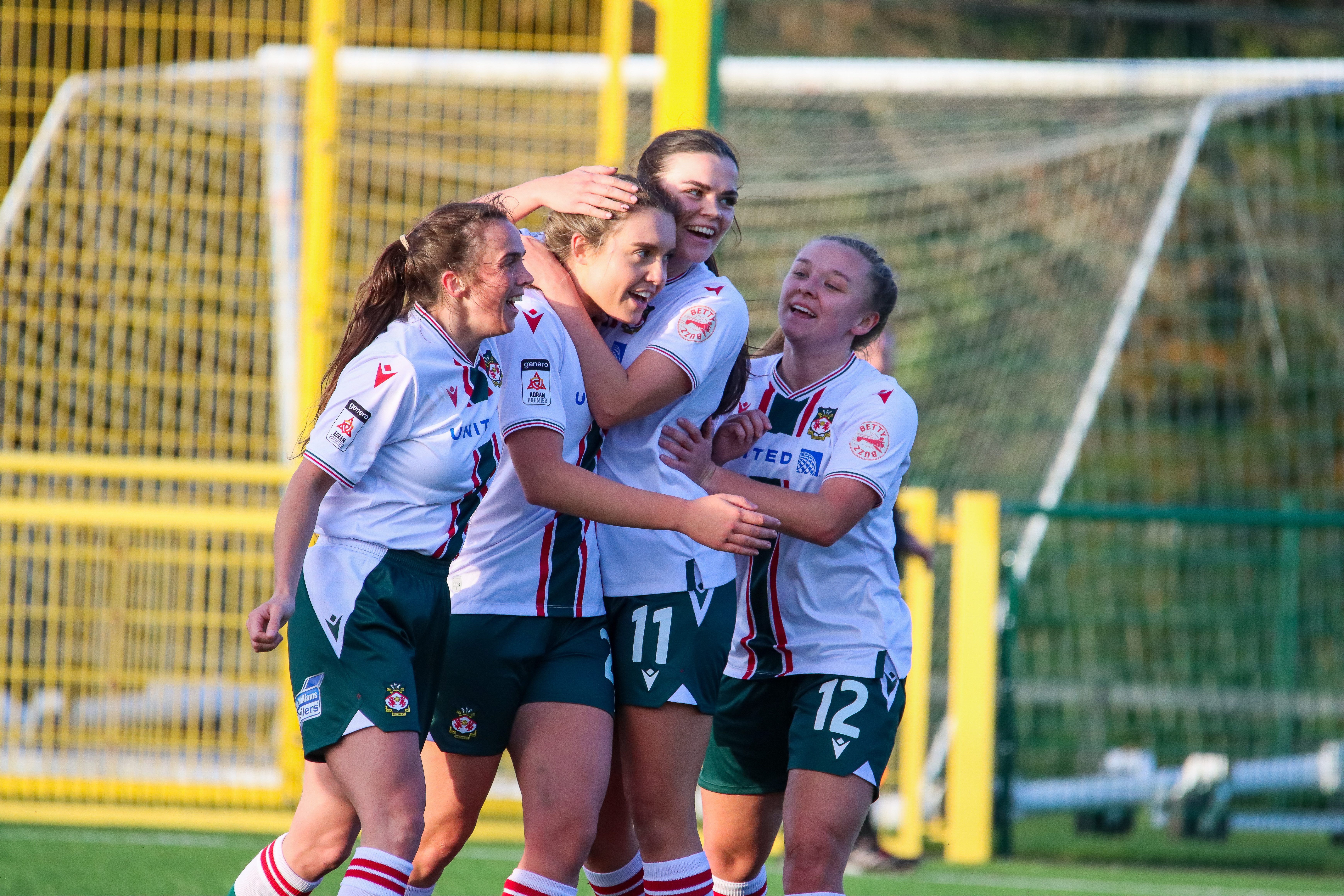
Wrexham’s Adran Genero Trophy match against Briton Ferry was postponed last Sunday, but plenty of ties did take place, and there was no shortage of goals. Upsets were much thinner on the ground, though, and that’s the problem.
I’m not saying there should be shock results peppered through every rond of a cup competition: that would suggest something very odd has happened to the structure of the game. However, the way Sunday’s games went clearly pointed to a different structural issue.
Consider these results:
Llandudno 0 Swansea City 13
Cardiff City 21 Pontardawe Town 0
Cardiff Met 10 Coed Duon 0
I think it’s fair to say that you don’t expect to get results like that in the last 16 round of a knock-out competition! In each case a top division side defeated a team from lower down the ladder, but still, this isn’t a situation you get in the FA Cup.


Obviously, in some ways mismatches are inevitable. Women’s football in Wales is still in an early stage of its development, as new teams emerge and existing ones develop. However, there’s too much of an imbalance when results like these are happening on a fairly regular basis.
It’s no coincidence that the three victors in these ties are the traditional top three clubs in women’s football: they represent the club that we are currently crashing. Obviously, Swansea City and Cardiff City are affiliated to professional men’s clubs and will gain and inevitable trickle-down advantage from that in terms of both high quality facilities and staff being available for them.
As for Cardiff Met, they won the league title 5 times in the 2010s, so they clearly know what they are about.
This is the level of competition we are looking to join, and we’ve done a remarkable job of doing exactly that so far this season. Those results clearly illustrate how Wrexham, a newly-promoted club after all, have done to adapt to a much higher level of competition.
Obviously, huge credit goes to Rob McElhenney and Ryan Reynolds for backing the vision of Gemma Owen and her excellent staff. It should also be pointed out that success hasn’t been achieved by throwing cash about, but by astute squad-building which goes back far beyond this season. After all, we’re slugging it out at the top of the table with essentially the same side which was playing in the Adran North last season: the only regular additions to the starting eleven have been the redoubtable central defensive pairing of Keren Allen and Louisha Doran, and the effervescent Cara Jones in attack.
Briton Ferry and Connah’s Quay boast similar quality in their squads at the top end of the second divisions, but they are massively handicapped by the system they are playing in, and I feel something has to change radically to allow them to develop, and in doing so, accelerate the growth of the women’s game in Wales. Those bizarre results last weekend prove my point.
With just one promotion spot between the two second tier leagues, development is massively restricted either side of the divide between first and second divisions.
Second level sides, starved of the opportunity to play against better opposition, will naturally struggle to better themselves. That’s a big part of why the likes of Llandudno, Pontardawe and Coed Duon couldn’t compete on Sunday. Access to higher player levels is denied them.
Likewise, can you honestly argue that Pontypridd, a top division side which was knocked out on penalties by Swansea University at the weekend, are being done any favours by being allowed to atrophy at the bottom end of the Genero Adran Premier?
It looks like the gig is up for them now, as a horrible league campaign sees them stranded at the foot of the table with no points. The restrictive promotion-relegation system means sides like them can get away with not developing for years, while strong sides in the feeder leagues wither as a consequence of the door to promotion being so difficult to pry open.
Meanwhile, inevitably a hegemony of well-resourced clubs sits atop the table, cushioned by the lack of movement in the top tier. We have managed to join them and stir the stagnant pond a little, but too few sides are offered the opportunity to do so.
For the sake of the development of women’s football in Wales, there needs to be a rethink. We have two massive South Walian clubs which are committed to developing their teams, plus a North Walian challenger which is packed with star quality both on and off the pitch.
The FAW must grasp the nettle and see them as resources to be used to further the women’s game. The more clubs there are in the top division, the more places these three clubs will visit, bringing publicity and excitement with them. Wrexham women’s team has inspired a generation in our city; by expanding our league programme, they can do the same on a national level if the FAW are brave enough to let them.



Leave a Reply