
Heading east to mark Wisla Krakow’s anniversary feels appropriate as there’s a deep, long-standing relationship between Wrexham and Poland.


It was fully established during the Second World War after the Nazi occupation of Poland in 1939. Rather than accept defeat, the Polish forces moved to other countries to continue to resist and fight for their homeland.
The Polish armed forces were the fourth largest among the Allies in the Second World War, despite the country being carved up by Germany and the Soviet Union in 1939. Apart from the resistance fighters and heroism of everyday Polish citizens who were motivated by their morals to take remarkable risks (more Poles were given the Righteous Among Nations award from Israel for saving Jews during the holocaust than citizens of any other nation despite Nazi policy that anyone caught doing so would be executed, as well as all their family), Polish troops and pilots escaped to allied countries and either joined their armed forces or formed their own units with the support of their hosts. Britain was particularly pleased to receive their support as the Nazis strengthened their grip on continental Europe. Polish troops fought with distinction, either as part of the British forces or as discrete extensions of their own military, Polish pilots played a huge part in the Battle of Britain.
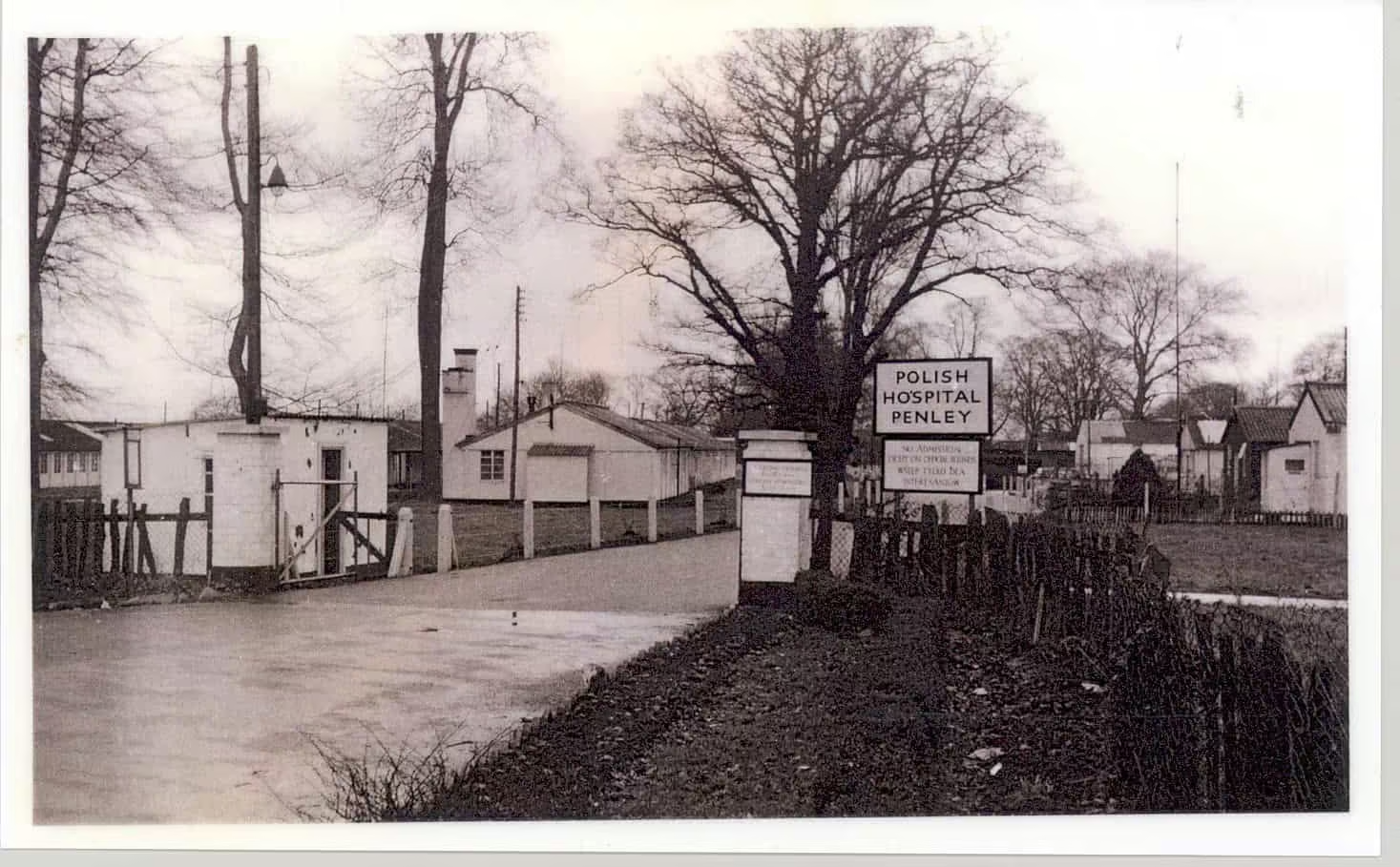
Once the conflict ended, the Labour government honoured Winston Churchill’s promise of free health care for all Polish veterans, and that led to the creation of the Polish Community Hospital in Penley, on the English border in what is now the county of Wrexham. Two thousand patients and staff lived there, a number which was boosted when an army unit based in Italy, which had won a pivotal victory in the Battle of Monte Cassino, decided en masse that the Soviet occupation of Poland made returning home impractical and moved to North Wales.
They were put up in facilities in Penley left by the US Army after they had departed for the D-Day landings. The camp was run down by three years of neglect, but
They created their own Polish community and certainly contributed to the local economy. The Royal Oak on High Street had been a popular haunt of G.I.s during the Second World War and when they returned home it was adopted by the Polish community, becoming known as the Polish Embassy, a nickname which has lasted despite there no longer being a link with the Polish community.
That Polish link began to have an effect on the make-up of Wrexham’s team, as you can discover here.





Leave a Reply