
Over the last month I’ve been regularly asked the same question: “What are you going to do now, with no football to go to for weeks?”


Honestly, do I come across as a one-dimensional, dismal character who can only express himself through the footy? Am I too infantile to grasp the great matters of state and trivial moments of existence that combine to
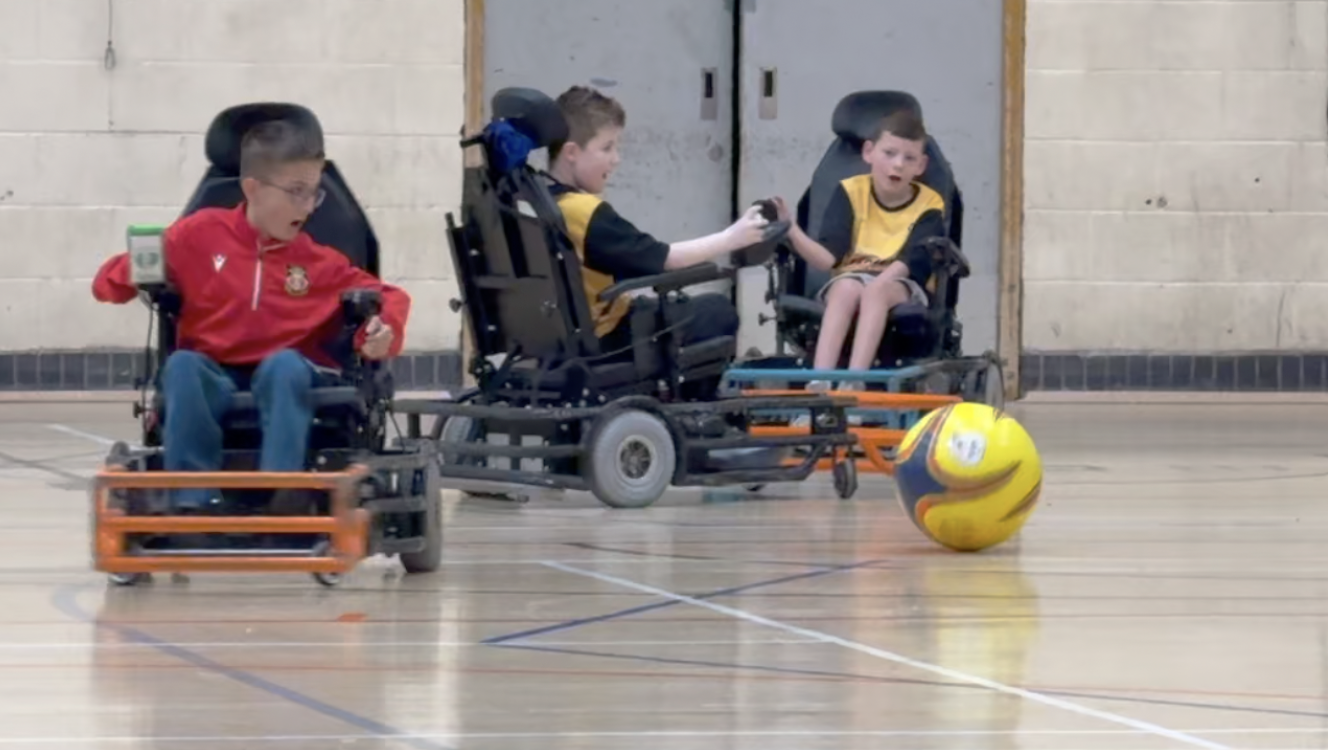
The answer to all those questions is “Yes”, so I improved one of the seemingly endless Wrexham-free weekends that have stretched out before me by going to watch our Powerchair team play in Liverpool.
I emerged with one regret: why hadn’t I done this sooner?
People looking at the whole Wrexham project from the outside fail to understand the real principles underpinning it.
Rob and Ryan, especially the former, came to North Wales seeking the opportunity to enjoy the day-by-day thrill of close involvement with professional sport.
However, when Reynolds said on his first visit to Wrexham that they just wanted to write cheques and have fun, he wasn’t just talking about signing Shaun Brisley.
This was a takeover with a much broader specification than just glory on the pitch. That much-vaunted community element wasn’t just PR: the difference they could make to Wrexham was central to the whole plan.
As a consequence, so many of the superb initiatives carried out by, or in the name of, the club have been supersized.
Quite apart from the owners’ generosity, their profile has allowed us to source sponsors whose largesse funds projects previously unimaginable for a club reliant on volunteers and hand-me-downs. Read Kerry Evans’ terrific autobiography for startling, detailed examples of the transformation.

Powerchair is an area of the club which has undergone such a revolutionary reset.
When Rob and Ryan attended a practice session with the cameras naturally recording their every move, it was assumed to be a photo opportunity which would last minutes at best.
Of course, that was not the case. These guys are genuine in their enthusiasm, and eager to see the impact of their vision. Having invested money, investing some of their time was a natural next step.
So, they stayed for a full session, loved every minute of it, and as a by-product gave a fascinating sport a serious bit of PR.
I’m therefore embarrassed to admit that it took me a couple of years to take the hint and go to see us play myself. Indeed, more than the owners’ enthusiasm, it was two sad moments and one of total joy which made me realise I was missing out on something important.
Two members of the powerchair side passed away in the course of the last season, and coincidentally I knew them both.

Andrew Hickey was a supporter I’ve known for four decades. The entrance to the old Mold Road stand, where it met the Tech End, was where I’d enter the ground in my early commentary days.
It was also where the supporters in wheelchairs would gather before braving the elements under totally inadequate shelters, or no shelter at all, to watch Wrexham play.
Andrew would always be there and we’d regularly have feisty debates, usually on whether Brian Flynn had ever bought a good player for Wrexham!
My argument, which I thought was a strong one, was that he’d signed the prolific Gary Bennett on a free transfer and picking up a player who would be top scorer in the entire country two seasons later in a higher division for no fee was about as good as it gets.
Andrew refuted this, his rebuttal revolving around a technicality: as a free transfer, Flynn didn’t actually buy Bennett, so he didn’t count!
Andrew embodied the committed fan’s experience of football perfectly. Loyally there, through wind and rain, to back the team, having pedantic conversations about the finer points of transfer policy with guys you wouldn’t have met if it wasn’t for your shared passion for the game, is exactly what it’s all about.
The other player who passed away was Jamie Wiffen, a wonderful young man who I was fortunate enough to teach for five years. In the dark days before legislation insisted public buildings were accessible, I would decamp when teaching his class to one of the few available wheelchair-accessible classrooms.

A portable classroom installed on the yard as an overspill for the canteen, it was hardly ideal. I seemed to always have Jamie’s class straight after lunch, and as the cleaning staff were not in the building in the middle of the day, we’d open every lesson by clearing the desks and tables of dropped chips, discarded cutlery and pools of baked bean juice. It truly was an overspill.
A true enthusiast with a permanent smile which encapsulated his personality, I’d not seen him again until about a year ago, when I bumped into him at a game and realised he was a regular at matches and for the Powerchair team.
I had no idea Jamie had passed away, and heard in the most upsetting circumstances, on the PA system while making my way through the packed concourse under the Wrexham Lager Stand to begin a broadcast. I’m glad I had the job of commentating to distract me for the next couple of hours.
The happiest circumstance which led me to Liverpool on a Sunday morning was a much more pleasant pre-match experience. I bumped into three of the powerchair team on the wheelchair platform in the Macron Stand before the Middlesbrough game began; when they invited me to their final game of the season, I was hardly going to refuse!
So, off I went to Greenbank Academy, favourably located in a beautifully green part of South Liverpool, but cursed with the smallest car park of any leisure centre in the world! Just round the corner from where I lived for five years, I’d forgotten that it was just round the corner from Penny Lane, so finding a place to park while negotiating a constant stream of tourist traffic was a challenge.
I’d also forgotten that my SatNav was set up to avoid toll roads, and paid the price for lazily following its lead rather than navigating a journey I’d made a thousand times before when it sent me up the M62 and then back down it again to circumvent the bridges and tunnels which navigate the Mersey!
Thankfully, matters were rather more organised on the Wrexham side of things! All sport is reliant on teamwork, of course, and the factors behind success on the pitch were laid bare instantly once I got inside. Coaches Josh Evans and Elgan Williams were putting the team through their warm-up, and as the ball zipped around it was interesting to contemplate another element of support which enabled the team to improve.
You might have noticed the news story a couple of months ago where Phil Parkinson presented the team with new chairs. The key feature of this new technology was quite simple, but crucial: the cages around the front which the ball is struck with are rectangular.
It might seem obvious, but that allows a massive improvement in control of where the ball is heading compared to the semi-circular structures on their previous chairs.

SP Energy Networks sponsor the community work of the Wrexham AFC Foundation, and their funding of the chairs is a direct example of how that sort of practical support makes a material difference.
Armed with tools which allowed them to do justice to their talents, we played a couple of superb matches. Powerchair is played over two halves of twenty minutes each on a basketball court, and a whole day’s schedule was arranged for a selection of teams ranging from Manchester City to the local team.
First, we faced Southport and it became instantly apparent that we were in control. However, pressure didn’t yield an opener and midway through the first half Southport created their first chance, a one-on-one with our goalkeeper.
Fortunately, that goalkeeper was our captain, Caio Jones, who brings to mind the poise, drive and strength of the first player I saw captain Wrexham, Gareth Davies. He made the save and we went straight up the other end and scored!

It was a pivotal moment which decided the game. Our domination turned into goals. Caiden Crouch helped himself to a couple, Matthew Palamarczuk was stretching Southport down the sides and by the end it was only some excellent goalkeeping in the second half which restricted us to a 7-0 win.
Our second match saw us come up against Altrincham, who were clearly stiffer opposition, but the wonderful thing about following any Wrexham team these days is that we tend to find a way to win!
Once again, the opening exchanges were tense, although it was proving a lot more difficult to carve out chances.
Alty’s captain was outstanding roaming the centre of the pitch with authority, but his influence was curtailed when the excellent Will Rees started to cross his path. Rees had scored a couple in the first match, but his contribution in the second was perhaps more decisive. His duel with Altrincham’s star man saw them constantly battling, side-by-side in the middle of the pitch, neither willing to give way and the ball wedged between their chairs.
Rees won the battle, Alty withdrew their skipper, and we took control. A sensationally swift transition – two touches taking us the length of the pitch in the blink of an eye – nearly led to a sensational opener with Morgan Jones’ technique at the heart of the move.

We broke through just before the break and took control shortly afterwards when Dan Roberts ghosted in perfectly between two defenders to score from close range.
We were in control, and a 5-0 win was given an emphatic flourish when Jensen Edwards scored the sort of long range screamer to make Ollie Rathbone proud.
It was hugely entertaining and continued an important process in my life-long journey to understanding what Wrexham AFC means.
I was drawn in by the men’s team and for over forty years Wrexham meant that team and the reserves and youth sides which fed into it. Now, I see a bigger picture and am enjoying my football all the more for it.
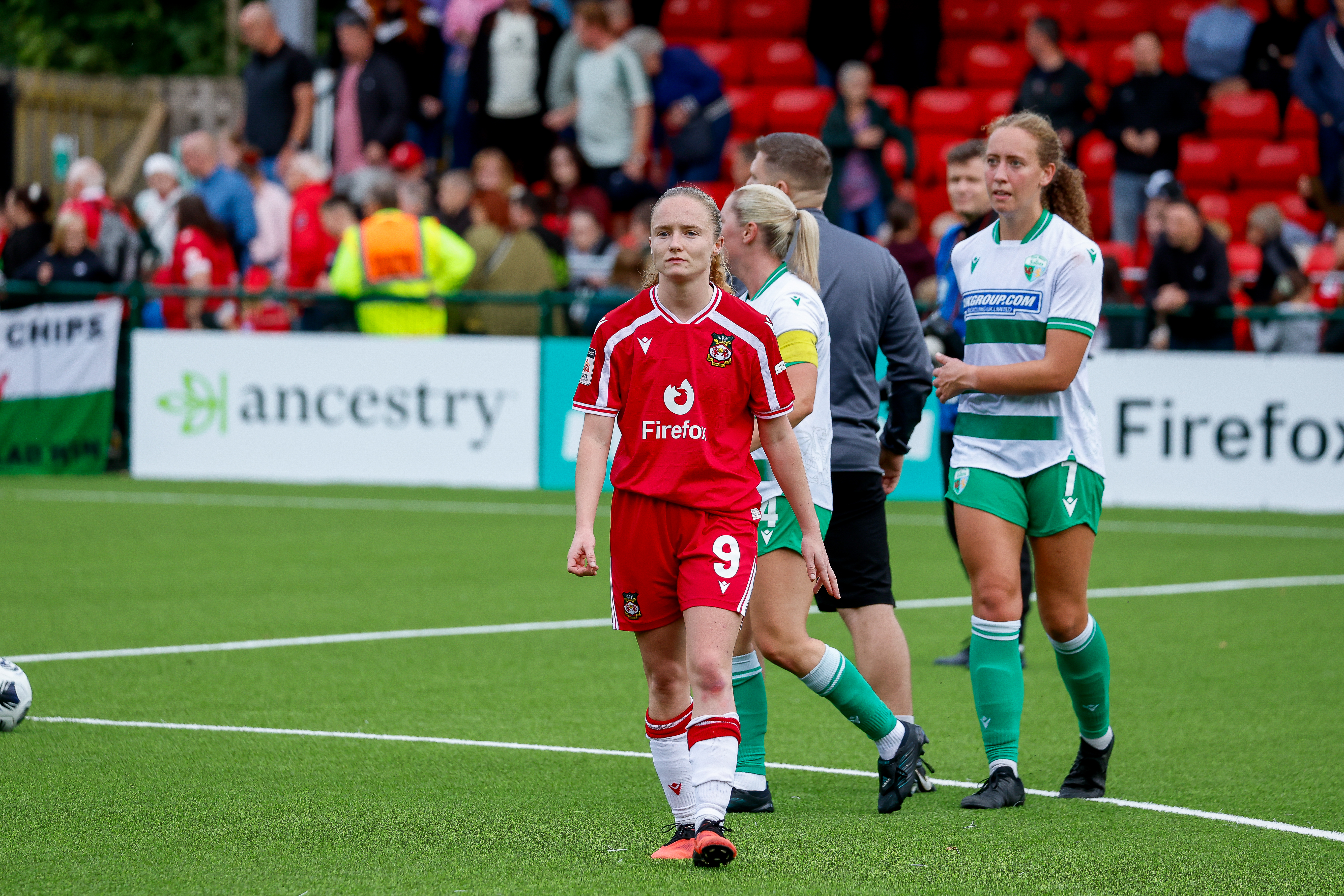
Just as the women’s team represent our club with distinction, the Powerchair side are doing something special.
These lads play for Wrexham. I wish I’d been good enough to be able to say that, and I bet you do too.

My commitment with our first teams means following the Powerchair side closely will be difficult, not least because their fixtures tend to be on Sundays and therefore clash with those of Jenny Sugarman’s side.
However, I’ve had my eyes opened to another great Wrexham team, furthering my understanding that this isn’t just a football club: it’s a massive cultural and historical resource for the community.
Arfon Griffiths, Phoebe Davies, Will Rees. All local, all Wrexham fans, all Wrexham players.
The list could go on, but my point remains: we look up to our heroes, and that doesn’t end with the men’s squad.
I’ve never lost that child-like excitement at meeting a player, past or present. I know that’s probably an embarrassing thing for a grown man to say, but I still get a thrill when a Wrexham player is willing to stop and talk to me, whether it’s Libby Cacace, Lizzie Craven or Jensen Edwards.
We’re defined by the people around us as well as ourselves, judged by the company we keep. I’m happy with that: Jamie Wiffen played in Wrexham’s first ever game and scored our first goal. And I knew him.
If I’m judged by that measure, I’m a very proud man.


Leave a Reply