

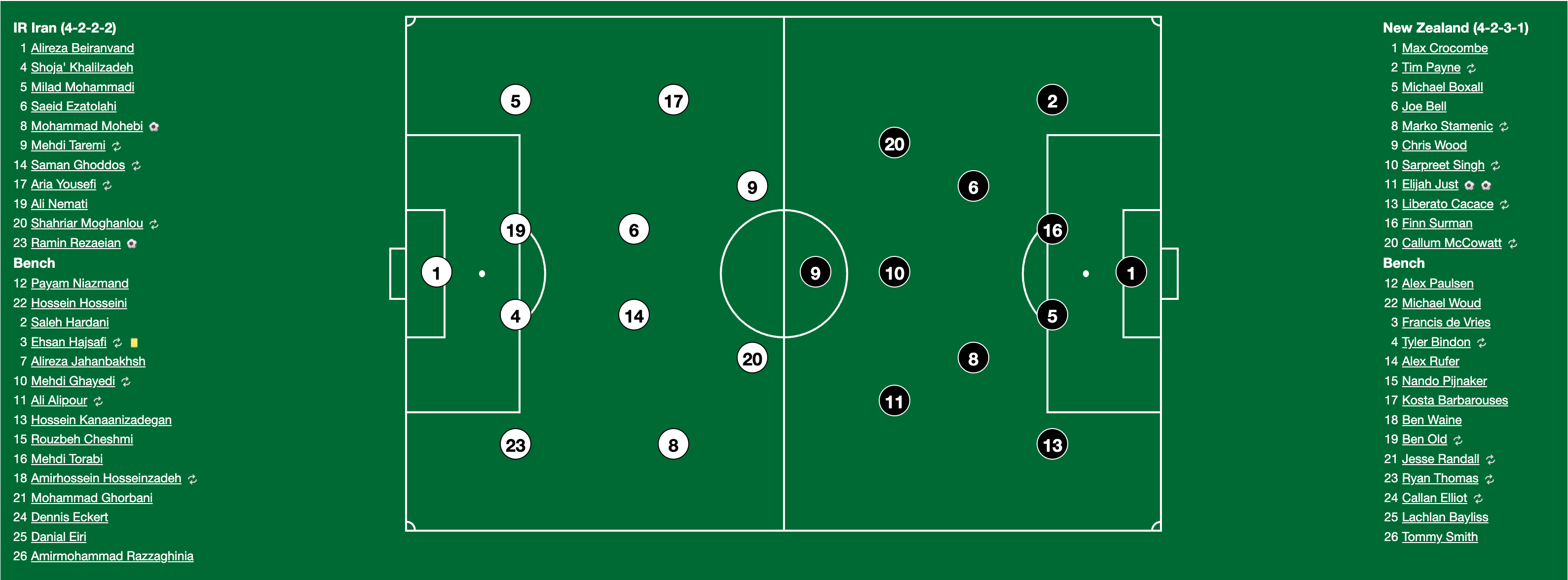
Libby Cacace starting New Zealand’s 2-2 draw with Iran, becoming the first player from the club to play in the tournament who hadn’t already agreed a transfer away (Dennis Lawrence, the only other player to appear in a World Cup while at the club, had already arranged to join Swansea at the end of his contract.)


Cacace played as left back in a narrow 4-2-3-1 and did very well, although the way the All Whites set up laid massive demands on him.
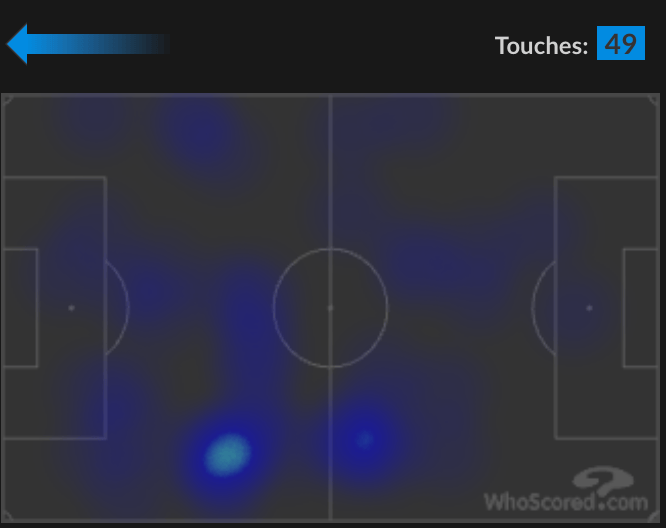
Cacace was required to hold a defensive position at left back, as part of a back four, while also looking to offer width when New Zealand had the ball. Obviously, that’s a lot to ask and he didn’t get forward as often as he would have wanted. Indeed, he was starved of possession in the early stages and looked frustrated as he unsuccessfully demanded the ball, even drifting into a central position for the only time in the match to search for the ball.
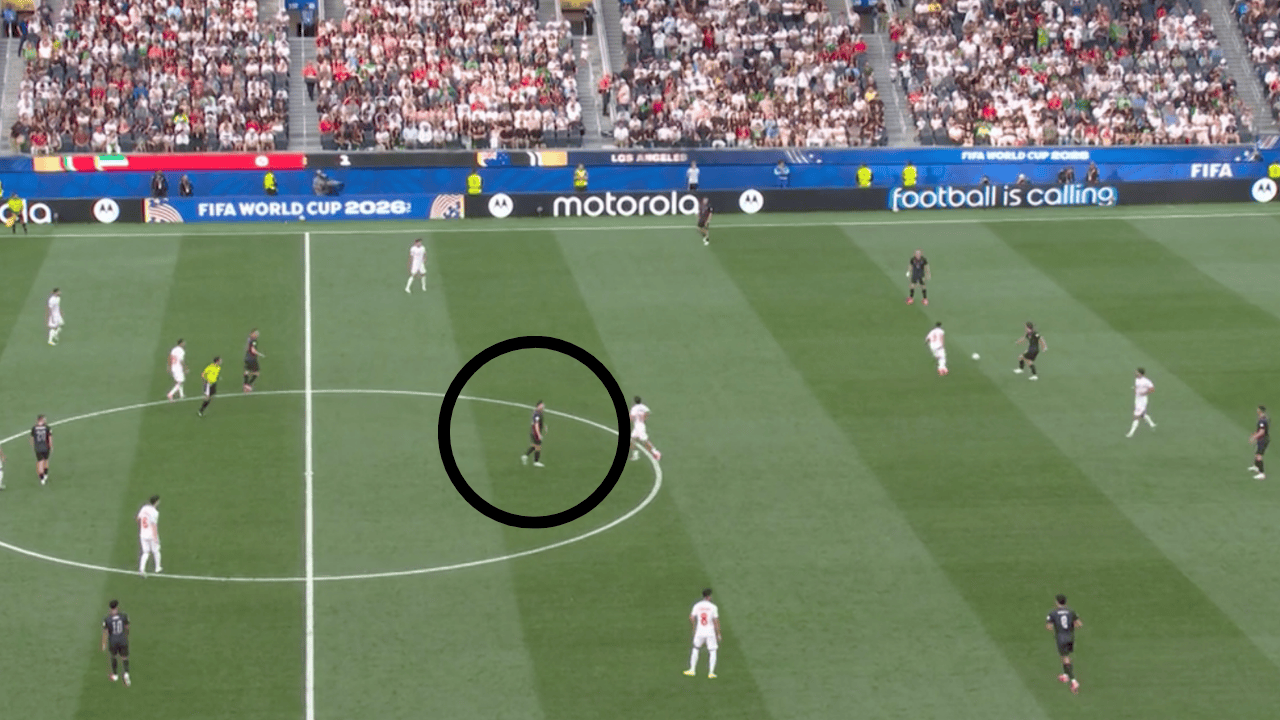
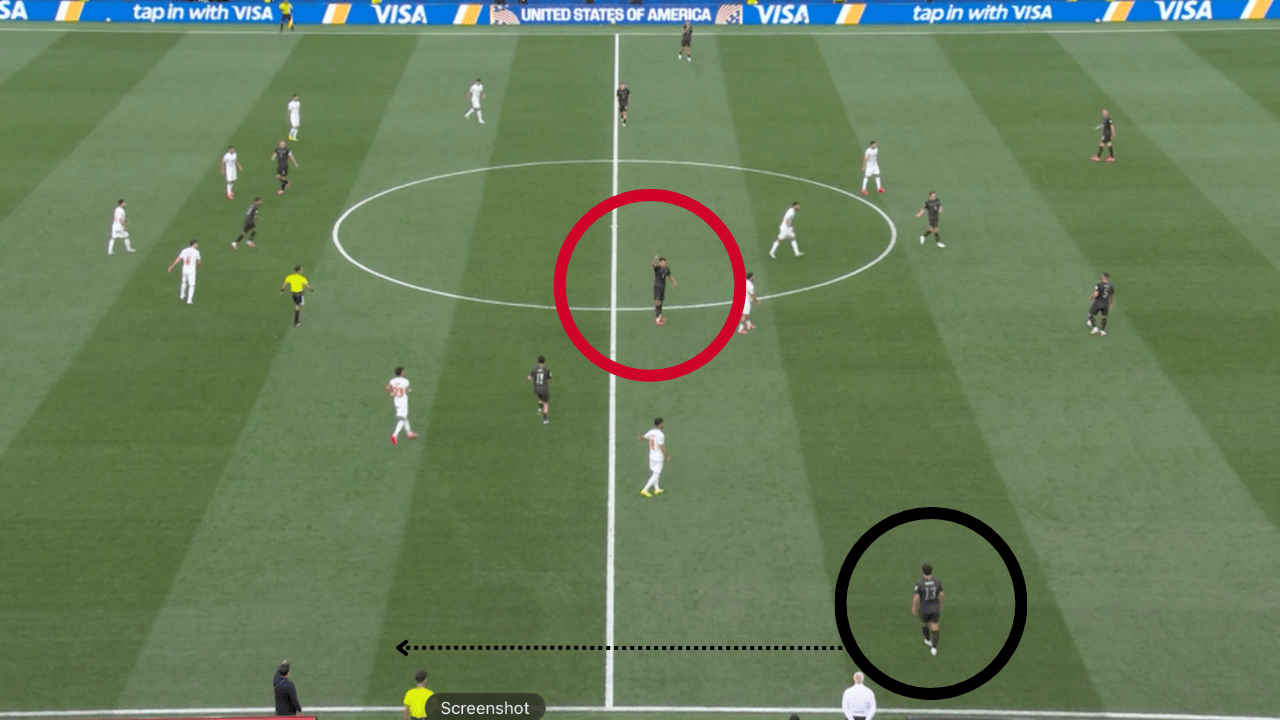
Soon afterwards Stamenic was encouraging him to get up the line, but it was difficult to commit to taking up such advanced positions, because Iran’s 4-4-2 gave them a man over on the flank. More of that later, as it led to the second Iranian goal.
Many of New Zealand’s best moments came when Cacace was able to push up the line and support the attack. He offered a potential target for Chris Wood when he took up a high starting position from restarts and long balls.
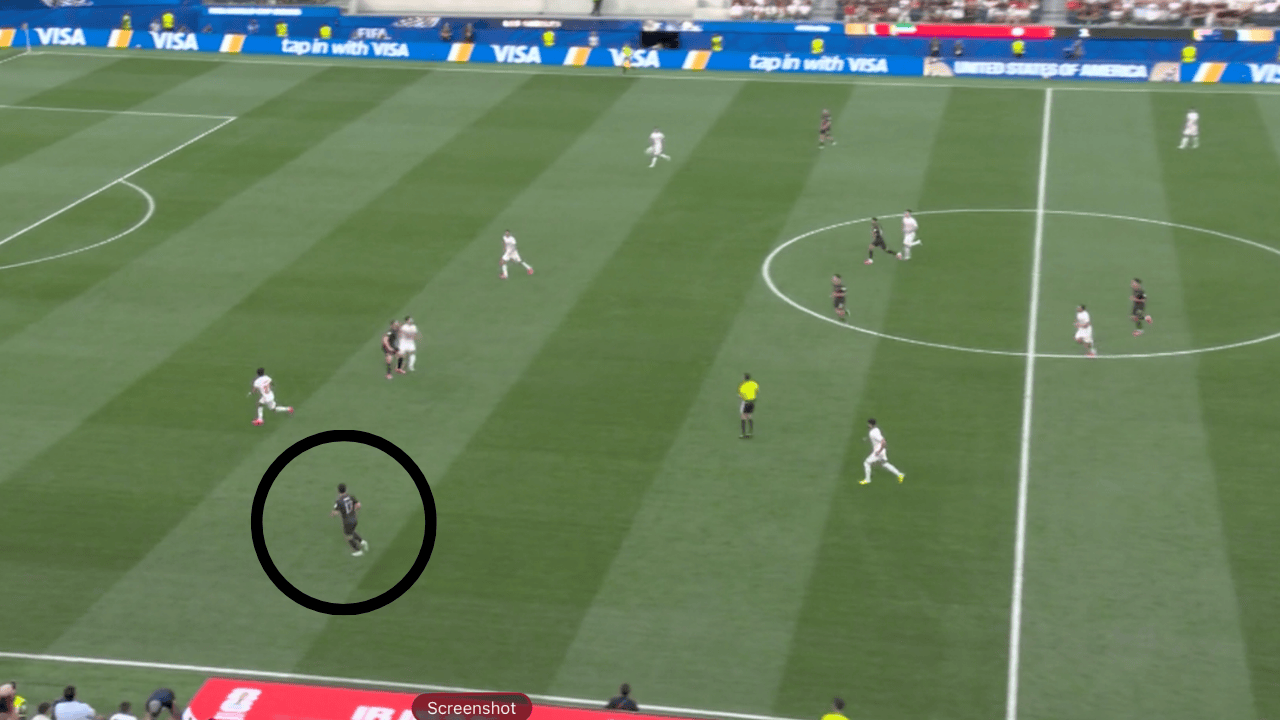
He worked a late opportunity to score after half an hour because his high position played to two of his strengths: linking play with give-and-gos and winning the ball in individual duels.
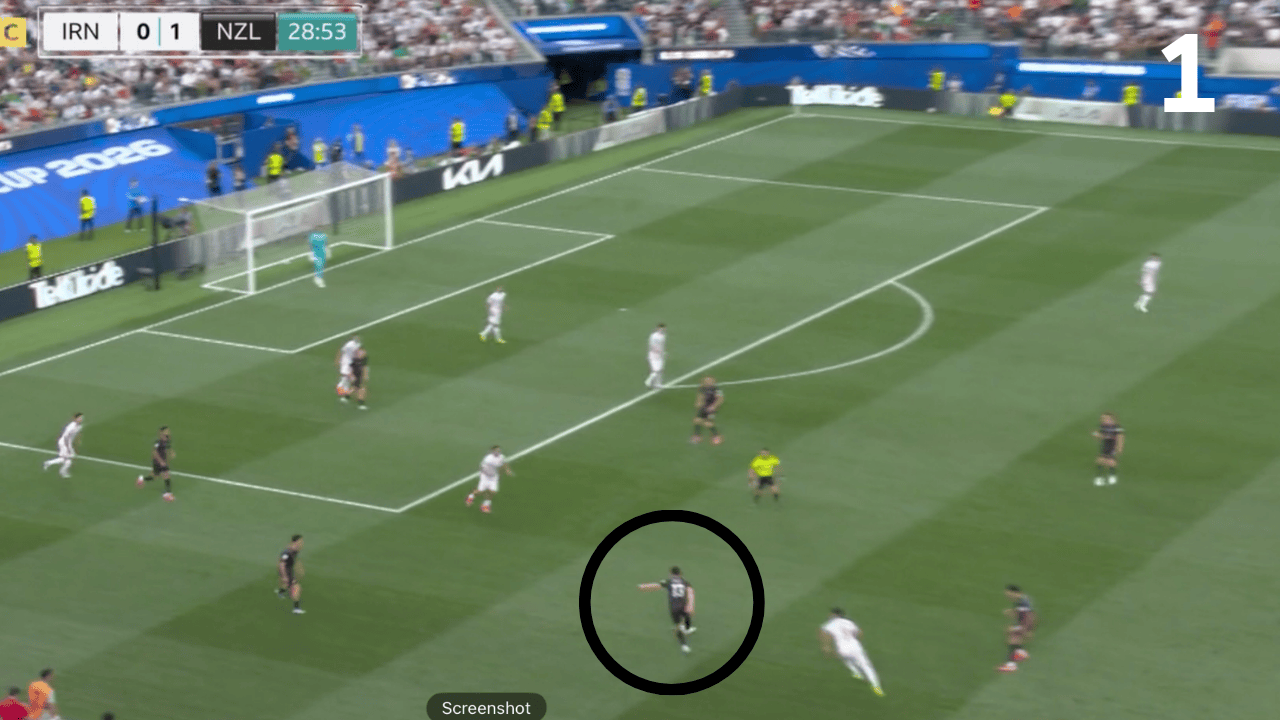
He made an interception high up the pitch and carried the ball forwards, drawing a defender to him.
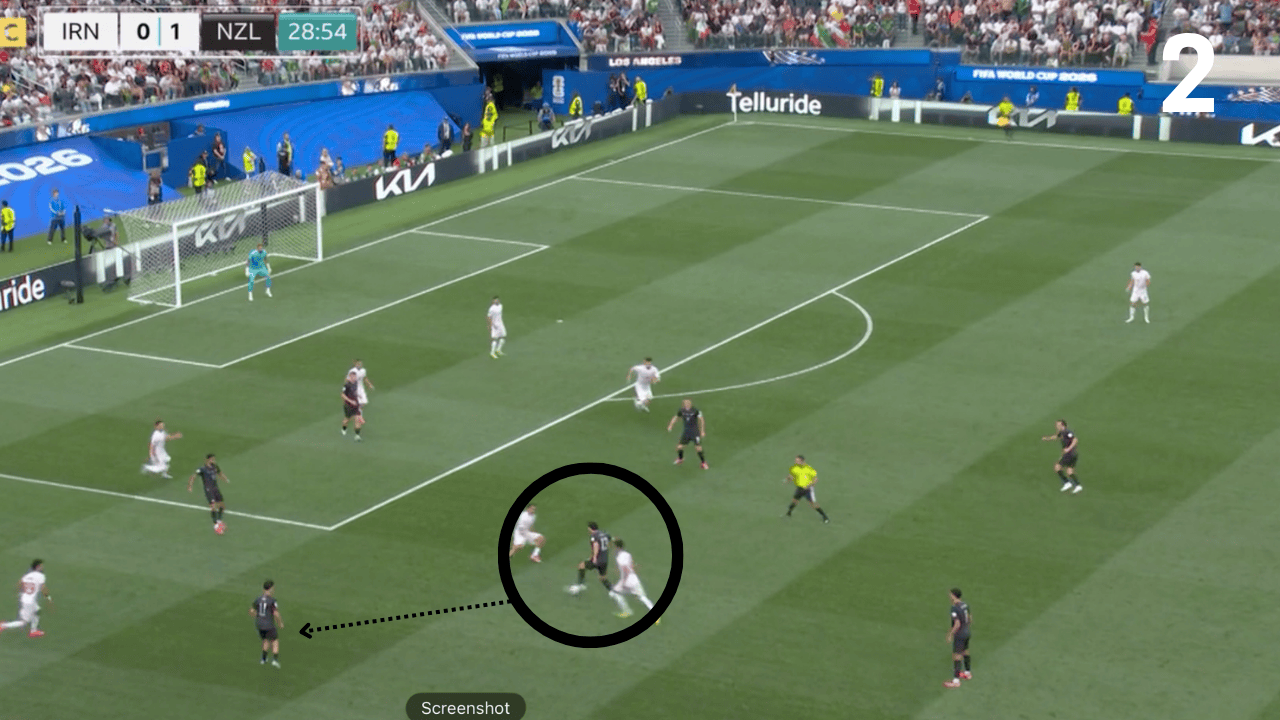
His quality on the ball came into play as he allowed the defender to get close to him before slipping a pass beyond him, drawing him away from the pass’ target and ensuring he wouldn’t be able to turn and track Cacace’s run in behind him.
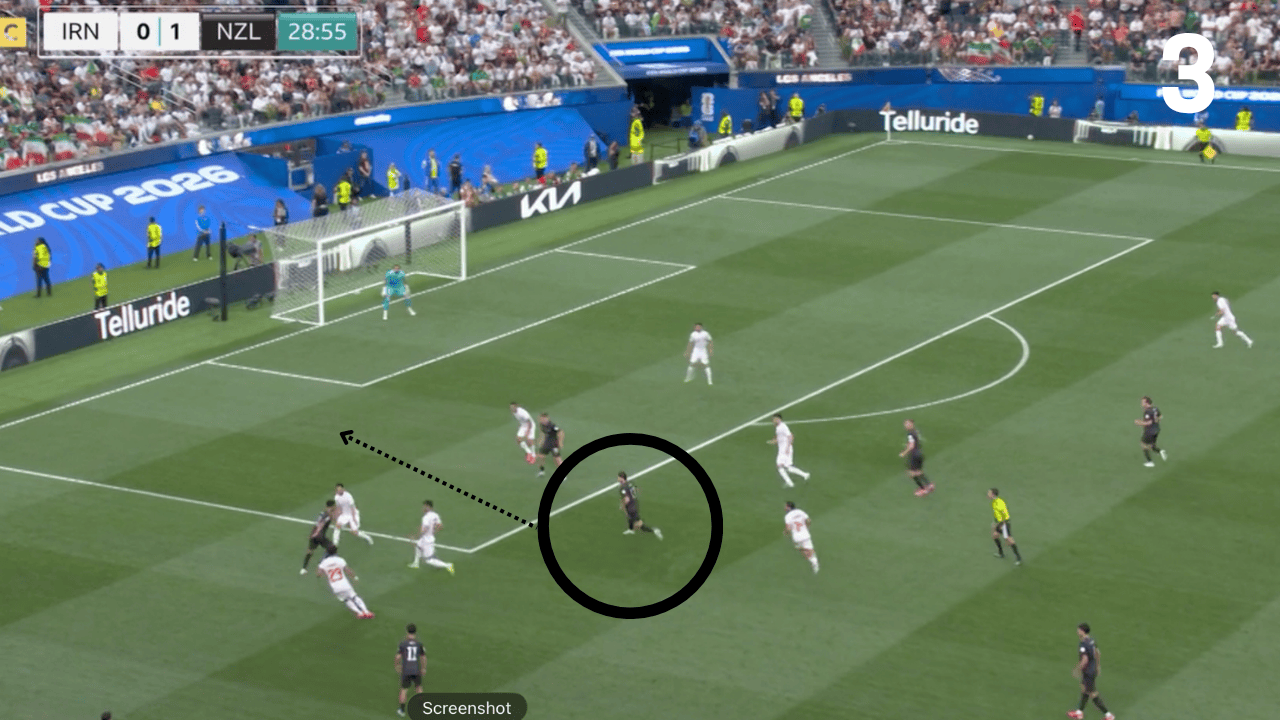
Cacace sprinted into the channel.
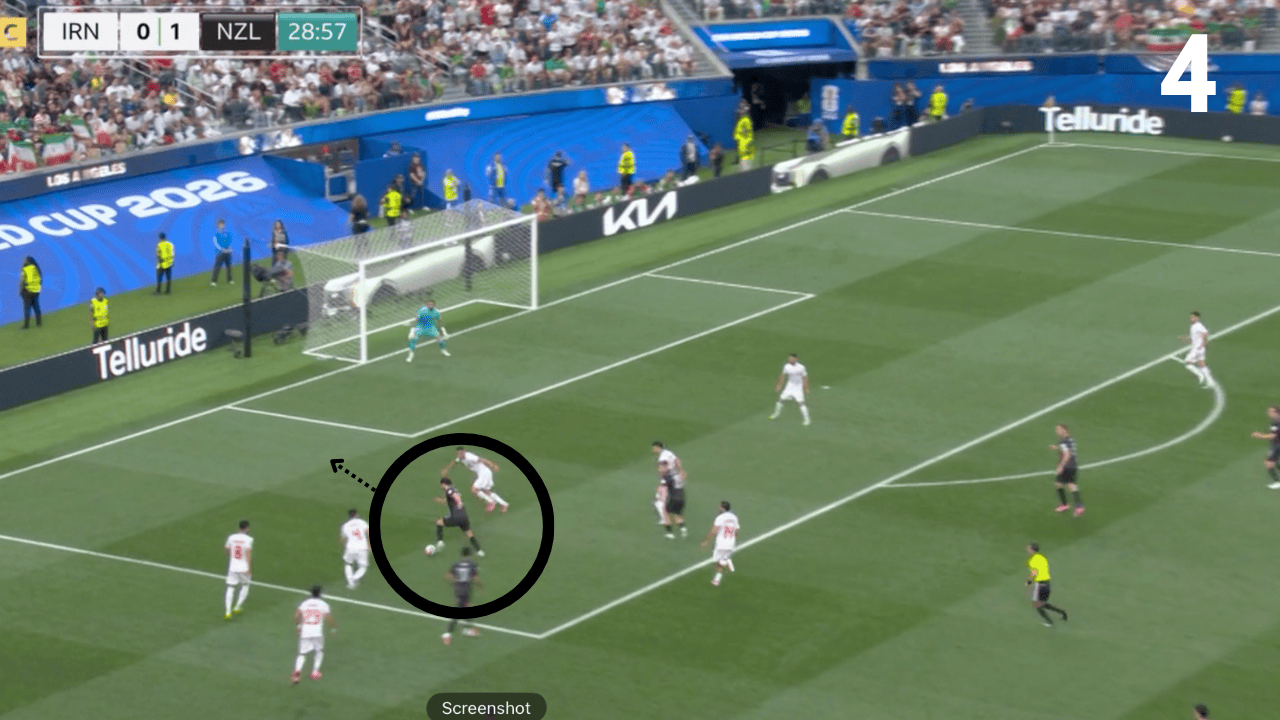
He then drove into the box after receiving a return pass.
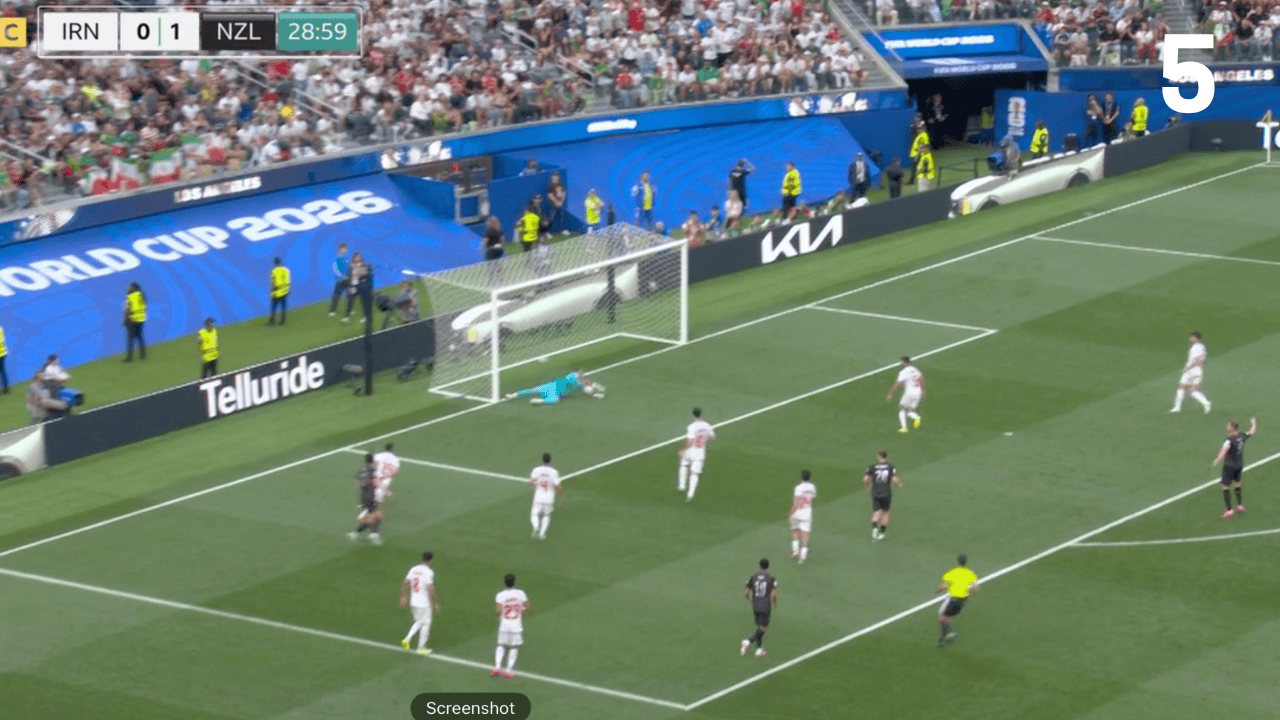
And drove in a good shot which drew a sharp save.
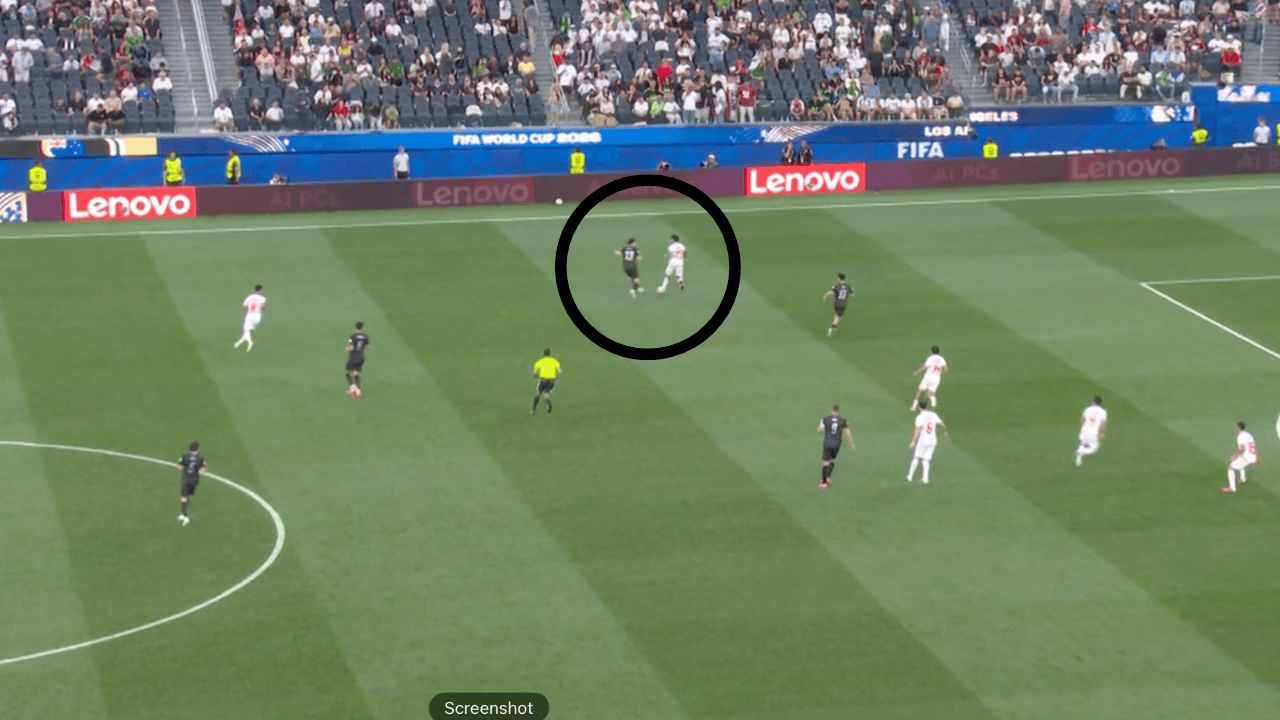
Cacace started the second half with intent, taking up aggressive positions and winning the ball high on the left.
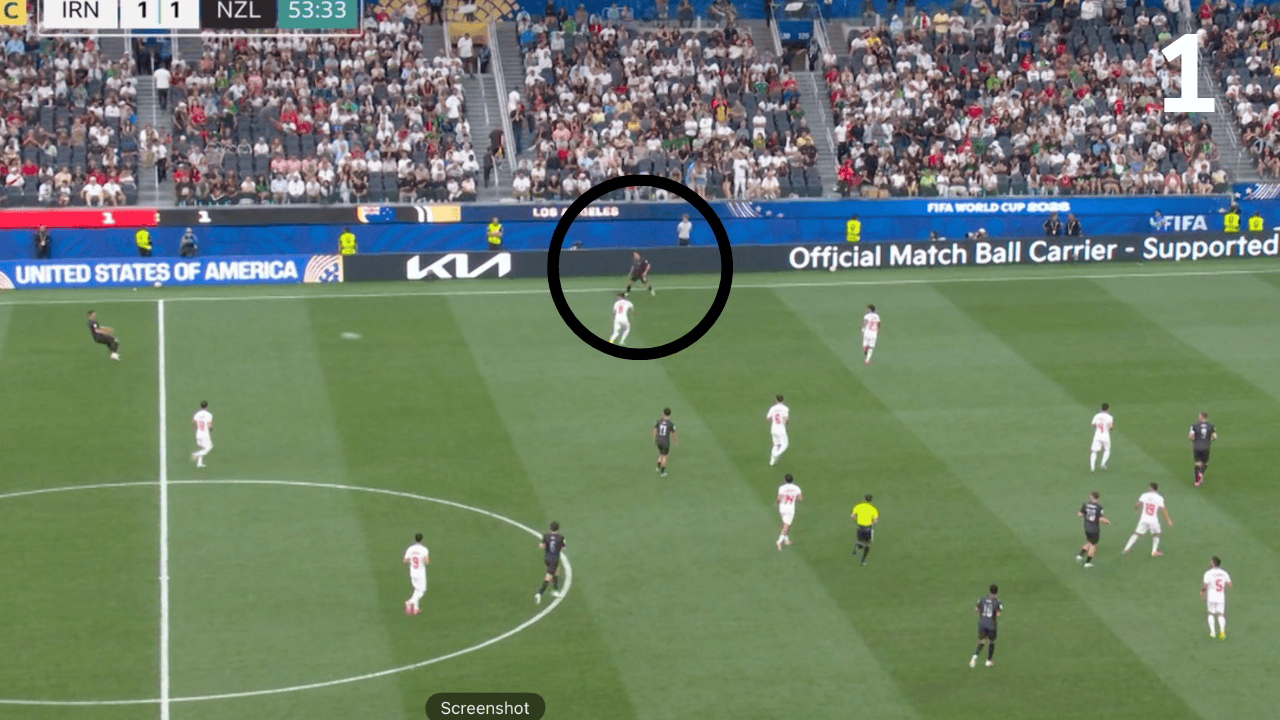
Soon afterwards he played an important role in the build-up for the second New Zealand goal. Again, the All Whites looked to have better balance going forwards when he took up an advanced position, as he did on this occasion.
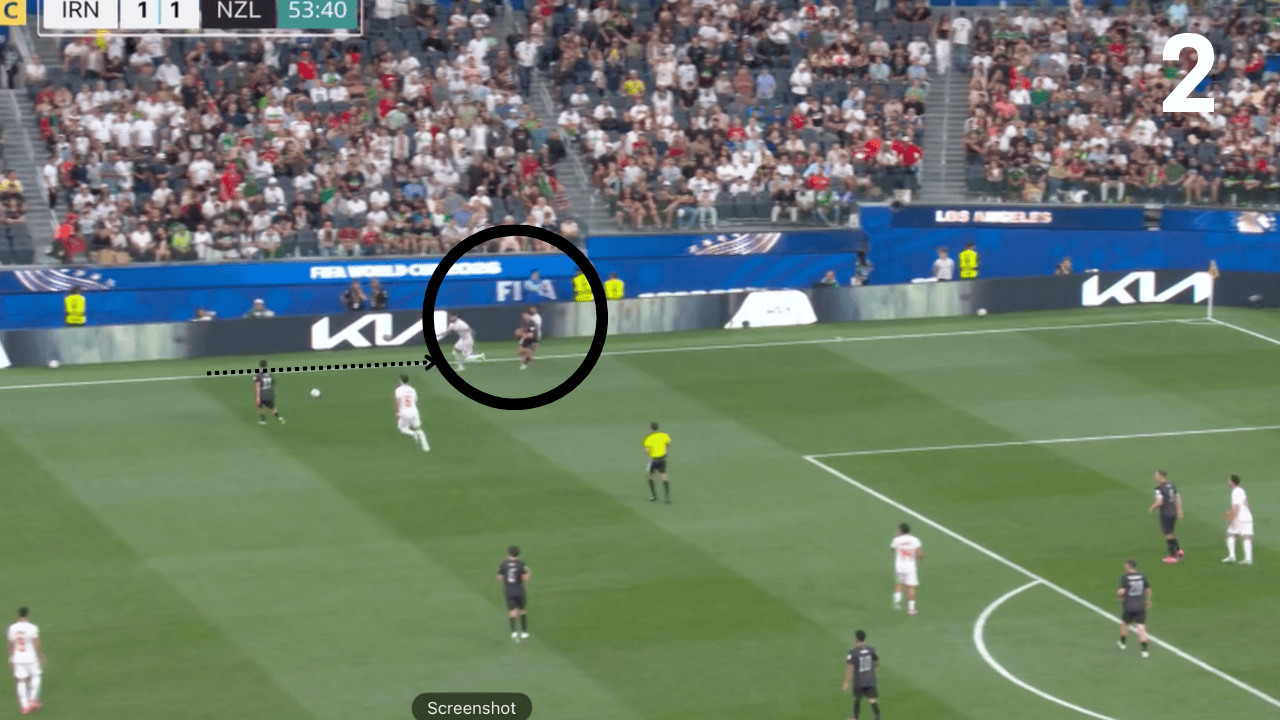
He drove down the line, forcing the Iranian defensive line deeper, and was composed once more, protecting the ball calmly when surrounded by opponents and, when he carried it as far as he could, laying the ball off.
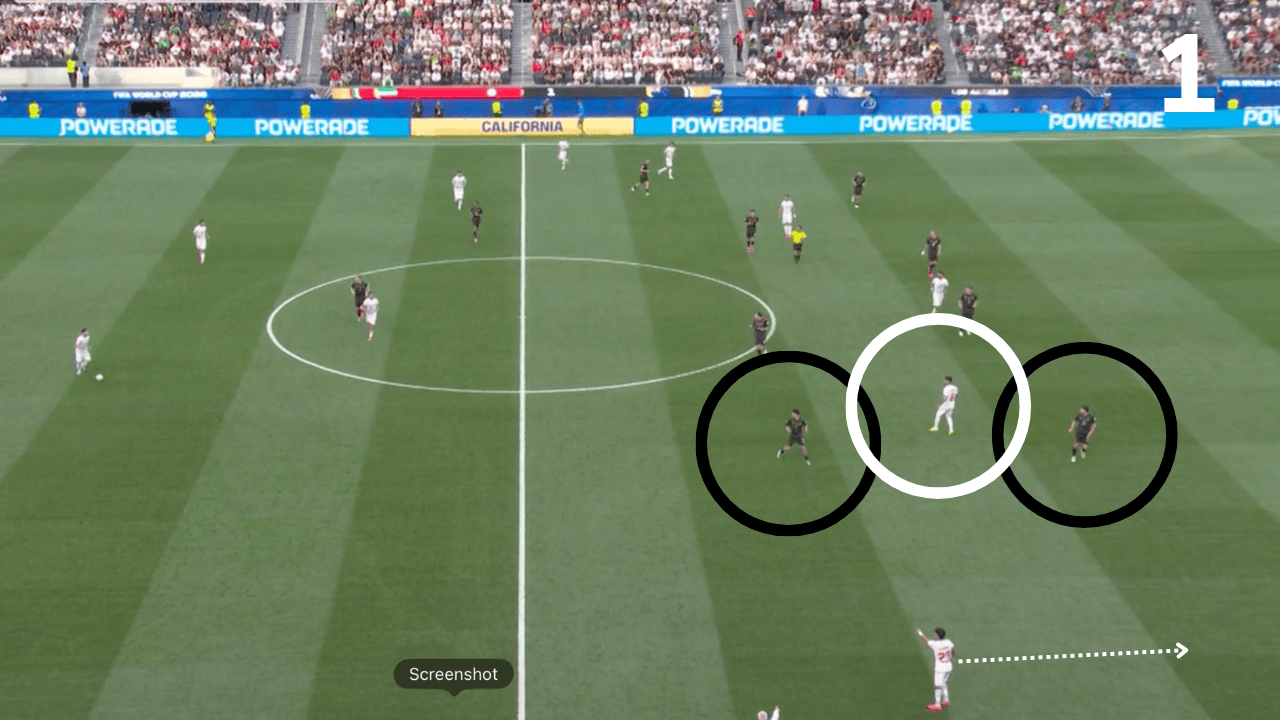
The team mate he passed to wasn’t so calm, and lost possession, but Cacace quickly sprinted back and won the ball back, before Iran could step out…
and swiftly got the ball forwards again. The next pass was the switch which allowed Wood to make the assist.
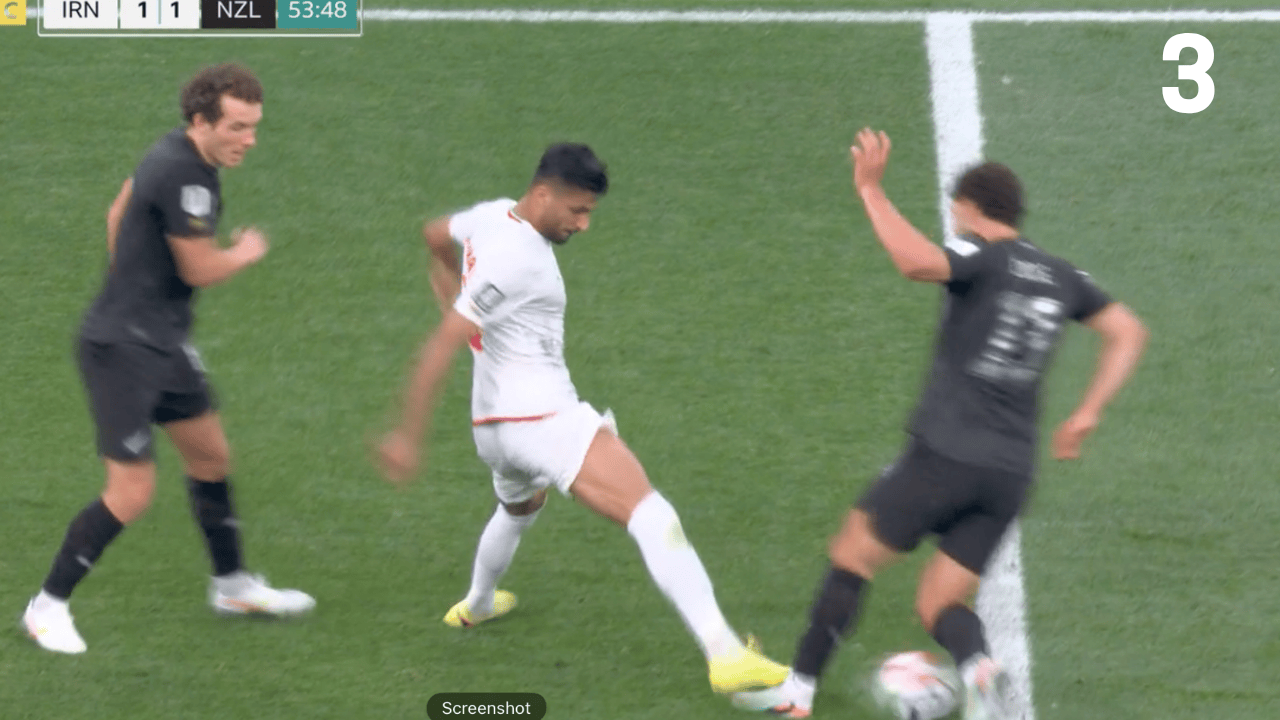
However, as I suggested earlier, Cacace wasn’t able to take such advanced positions up consistently because he had to cover defensively, and Iran were consistently able to work an overload on his flank. As I suggested earlier, Iran’s 4-4-2 naturally helped them to do this against New Zealand’s 4-2-3-1: on the left of their second line Eli Just, the star Kiwi with two goals, was able to get into scoring positions by playing narrow and drifting inside into scoring positions. The first came from a central area in the box and for the other he was able to get across into the right channel. This meant he often left Cacace isolated on the flank, and Team Melli exploited this craftily.
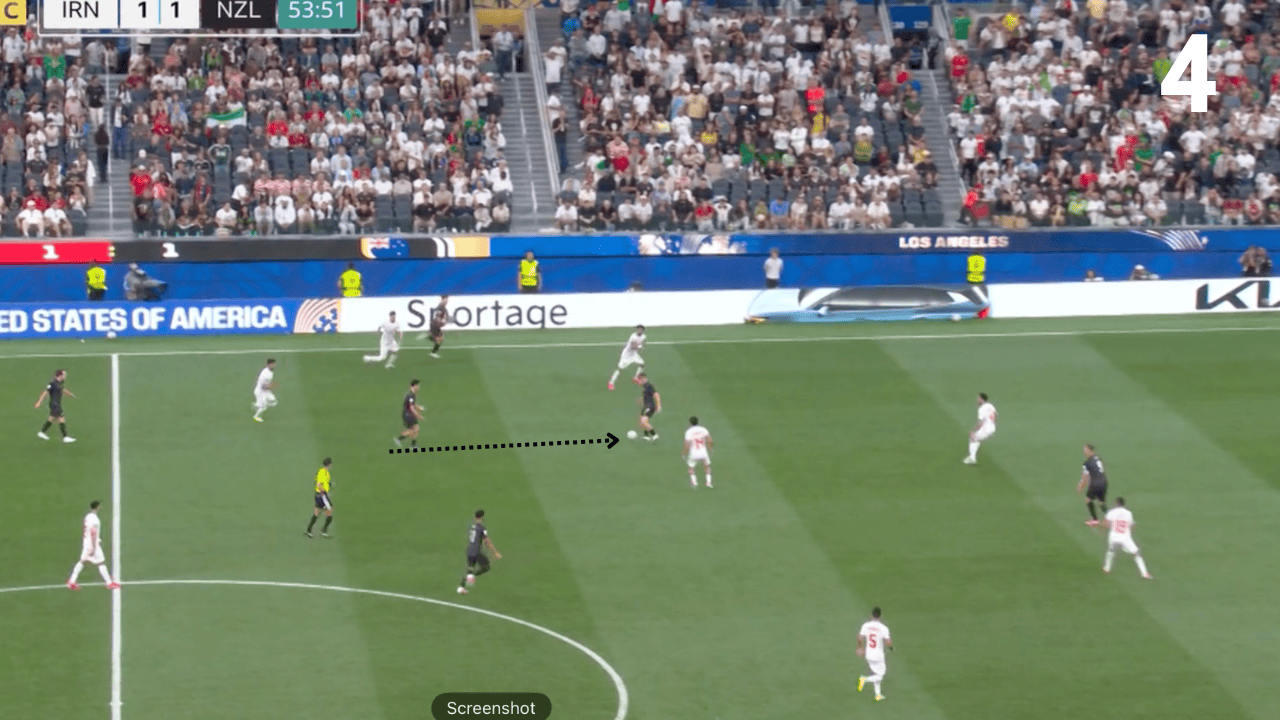
Striker Mohammad Mohebi drifted right of centre to pin Cacace, forcing him to remain narrow and cover his centre backs. That created space on the outside for adventurous right back Ramin Rezaeani, who was Iran’s best player.
Just didn’t drop back to cover Mohebi meaning he had time and space to cause problems on the flank. The situation above, from the first half, came to nothing, but in the second half Iran worked the same situation and scored from it.
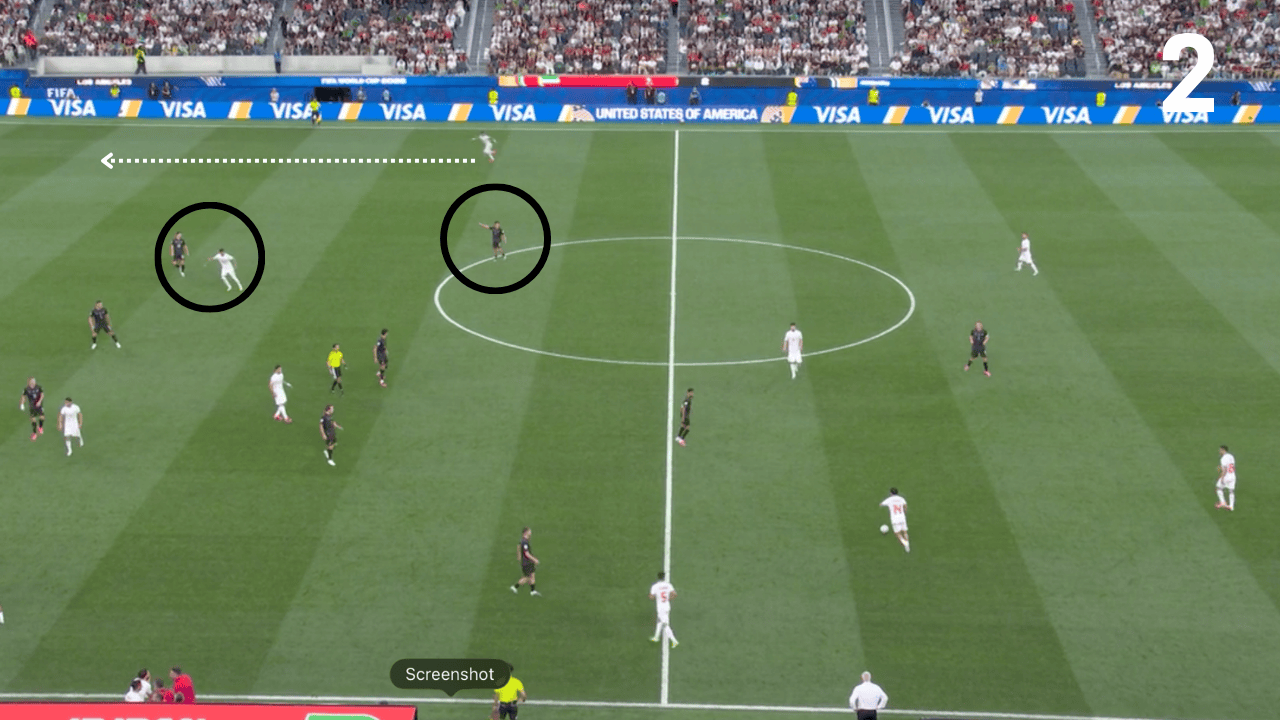
Once again, Cacace has to tuck in to cover Mohebi, leaving space outside him. With Just not dropping back again, Ghoddos is able to hit the space on the outside with a switch so good Iran instantly substituted him!
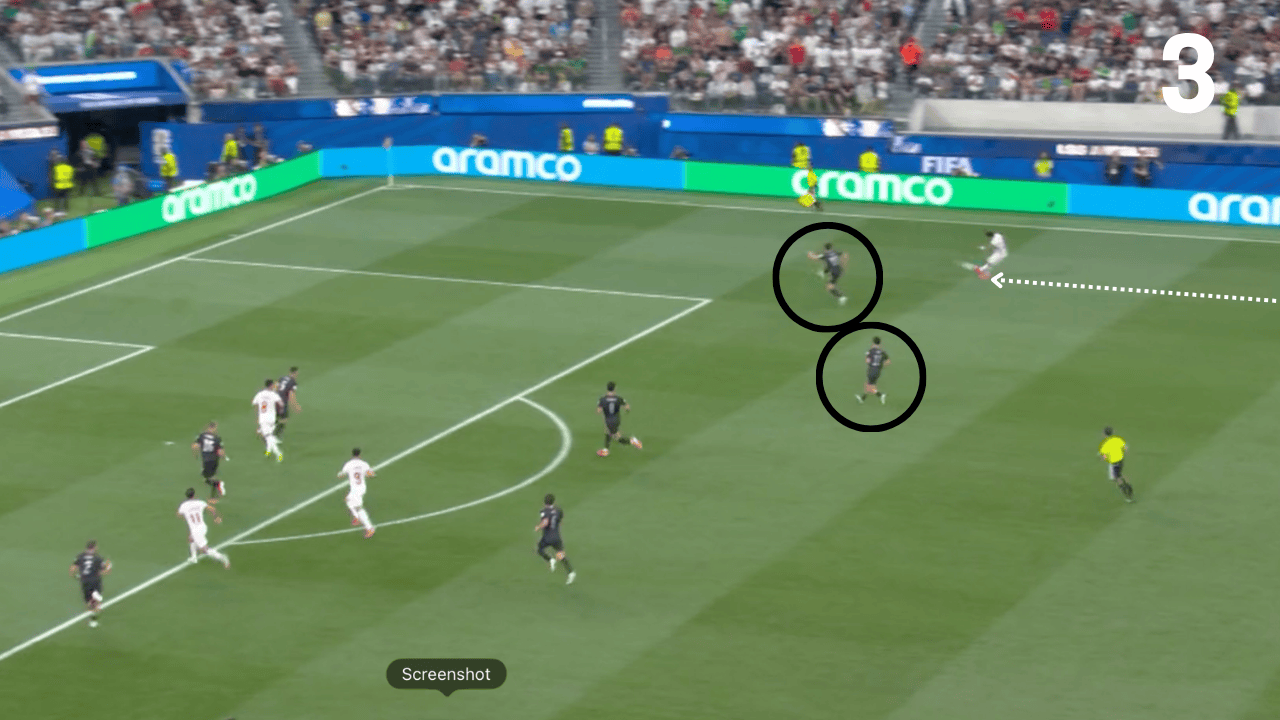
Rezaeani raced into the space and, with Just jogging back into the box, Cacace had no option but to try to cover the space to him. He had no chance of getting there in time, and Rezaeani had plenty of time to set himself and whip in a cross which was headed in.
Cacace was withdrawn after 68 minutes, which one would assume was due to protecting him as he comes back from an injury sustained in February, as well as taking the conditions into account. He has yet to play a full ninety after his return from injury, and then managing 45 minutes in the pre-tournament warm-up against Haiti and 61 in the 1-0 loss to England. His last full match was against Sheffield Wednesday on January 31st.
He did well, especially considering his lack of game time. However, the demands placed on him tactically illustrate how Wrexham tend to be better set up to get the best out of him with their more balanced system, allowing him to operate as a wing back.




Leave a Reply