
Any decent manager will have a plan. The good ones are able to work out a solution when the plan is disrupted.
Phil Parkinson was presented with a problem when Paul Mullin was injured in pre-season, and his success in finding a solution is illustrated in our league position – barely a whisker off top spot – and the amount of goals we’ve scored – amongst the most in the division – despite not being able to select our goal-scoring talisman.


Parkinson’s side has the advantage of being a well-grooved, successful team. That’s not good fortune: Parkinson has earned his luck by constructing a structure and putting the right players into it.
In an odd way, that can become a disadvantage if a key part of the system is absent. Rearranging a team which was geared to provide opportunities for Mullin took skill and judgement.
Steve Dale, the manager of Wrexham’s women’s team, has been presented with a similar problem this season, and we caught a fascinating glimpse of how he might go about solving it in Pwllheli on Sunday.
The issue is an injury to Amber Lightfoot. Dale’s Wrexham are very good in transition – Swansea will attest to that! – and Lightfoot is a vital component when we counter-attack swiftly.
Usually deployed on the left of a front three, her speed is crucial in developing a fast break, and her ability to cut in on the diagonal, plus a calmness when setting herself to shoot, means she is a potent attacking force. She scored a lot of goals last season, but was inevitably overshadowed by the ludicrous figures Rosie Hughes was posting!
The front three which saw us home last season, and terrified Swansea in our opening game, was beautifully balanced and well practised in the art of combining at speed to slice through opposing defences. Lightfoot’s pace is complemented by Rebecca Pritchard’s intelligent movement and nose for goal, with Hughes being a glorious x-factor.
However, Lightfoot picked up an injury after that opening match which has ruled her out of our subsequent matches. We have good alternatives in wide attacking positions, but when we faced the toughest challenge in Welsh women’s football, Cardiff City, we weren’t quite able to attack with the efficacy we’d managed in previous games. That’s not a criticism of the players we used; simply a recognition that, at the highest levels, it takes time to develop structures to trouble strong opponents.
Dale’s response last Sunday was fascinating, and showcased his ability to reorganise with subtle touches which opened up new attacking possibilities.
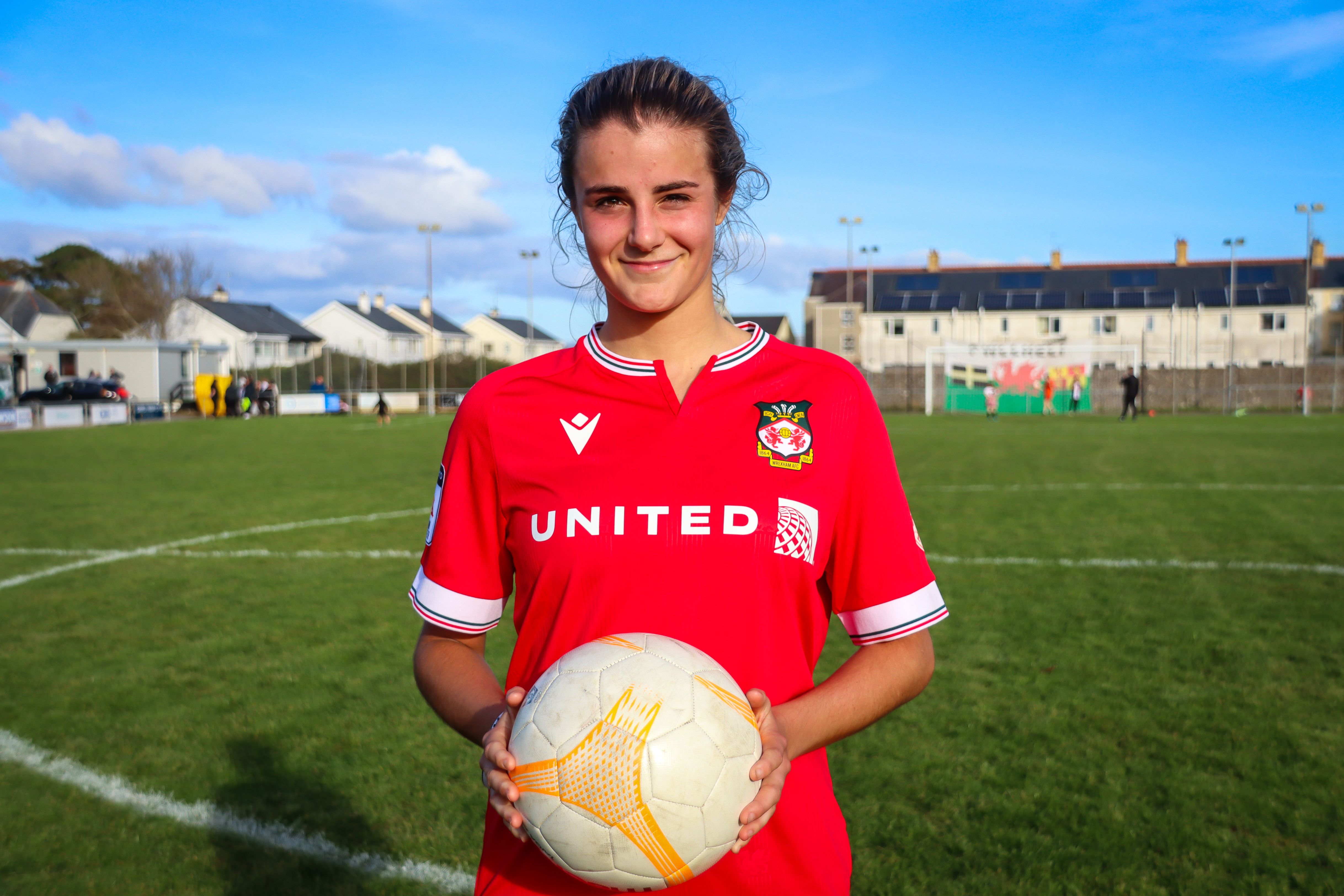
He fielded Ava Suckley on the left, for the opening hour, at least, and the results were phenomenal. I’m not naïve – a 13-0 win is not the best place to judge a player. However, the positional tweaks which Suckley accommodated were fascinating.
Suckley’s attributes are more those of a central striker than a winger, and that difference between her and Lightfoot created new possibilities. She would often take up a narrower position in the half-space, opening up avenues for Erin Lovett to drive forwards. Between them, they caused mayhem on the left in the first half.
Suckley was also quick to exploit her natural tendency to take up goal-scoring positions. When the ball was on the left, she was quick to make dangerous runs across the goal to pop up unexpectedly at the near post. Two of her goals came from precisely that manoeuvre.
When the ball was on the left, she could attack the goalmouth from a different angle to Lightfoot, and exploited the space that was created to good effect. By the end of the game she had six goals and an assist to her name!
Dale’s adaptation of the side to accommodate Suckley’s different positioning is what good management is all about. It hasn’t been tested in a league game yet, and if Lightfoot is fit by next weekend there might be no need to do so. However, he’s illustrated his ability to deal with adversity in an innovative way. The Parkinson Way, one might suggest.






Leave a Reply